Agriculture & Food · FPM Briefing
FDA Proposes Mandatory GRAS Safety Notices for Food Ingredients
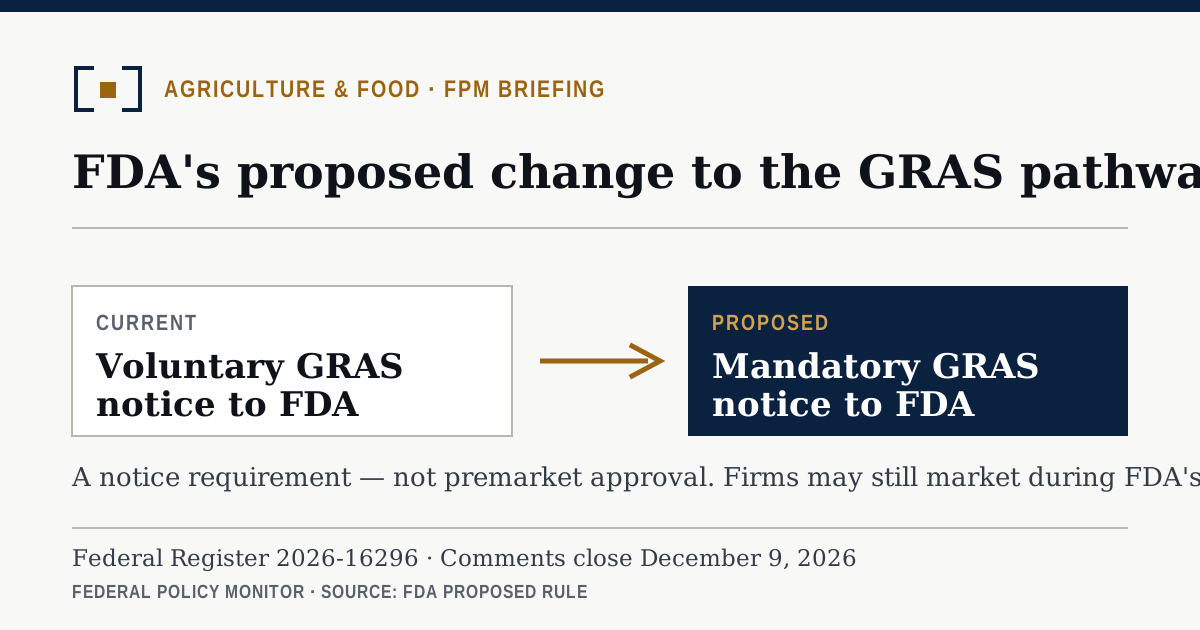
The Food and Drug Administration has proposed requiring companies to file a “generally recognized as safe” (GRAS) notice for human and animal food substances they intend to use — making a step that is voluntary today mandatory. Notably, the proposal is a notification requirement, not premarket approval: firms would still be able to market a substance without waiting for FDA to respond. The rule is proposed, not final, and is open for public comment through December 9, 2026.
The Food and Drug Administration has proposed a significant change to how it oversees food ingredients: it would require companies to notify the agency when they conclude that a substance is “generally recognized as safe,” or GRAS. That notification is voluntary today. The proposed rule would make it mandatory — but it stops well short of requiring FDA’s approval before a substance can be sold, and understanding that distinction is the key to reading the proposal accurately.
How to read this report
OFFICIAL FACT — FDA published this proposed rule (Federal Register document 2026-16296, RIN 0910-AJ02) on August 11, 2026, and comments are due by December 9, 2026. PROPOSED POLICY — the requirements described below are proposals FDA can change before any final rule. FPM ANALYSIS — labeled where it appears, and reflects Federal Policy Monitor’s interpretation, not the government’s.
What FDA is proposing
FDA proposes to require the submission of GRAS notices for the use of a human or animal food substance purported to be GRAS under the conditions of its intended use. In the agency’s words, it would require “any person introducing a substance into interstate commerce under the GRAS provision of section 201(s) of the FD&C Act to notify FDA of the basis for their conclusion that the substance is GRAS.” In effect, it converts today’s voluntary GRAS notification program into a mandatory one.
How the GRAS framework works today
Under the Federal Food, Drug, and Cosmetic Act, a substance added to food does not need FDA premarket approval if it is generally recognized as safe by qualified experts for its intended use. Today a company can reach that GRAS conclusion on its own — a practice often described as “self-GRAS” — and FDA runs a voluntary program through which companies may, but are not required to, notify the agency of their conclusion and its basis. Because the notice is optional, FDA does not necessarily know about every substance a company has determined to be GRAS.
What would become mandatory — and what would not
The proposal makes the notice itself mandatory: a company would have to file a GRAS notice with FDA and disclose the basis for its safety conclusion. What it does not do is require FDA sign-off before the substance can be sold. The rule states plainly that “there is no requirement that a notifier must wait to receive a response from FDA regarding their GRAS conclusion before introducing the substance into interstate commerce.” That is the crucial line: this is a mandatory-notice regime, not premarket approval.
Companies with substances already on the market
The rule proposes exceptions rather than a blanket requirement on everything already in use. Substances already listed or affirmed as GRAS in FDA’s existing regulations (21 CFR parts 182, 184, and 186), used under conditions not significantly different from those, would not trigger a new mandatory notice. The proposal also includes a time-limited option for a streamlined submission covering certain intended uses of substances already in interstate commerce — a transition path for the existing market rather than an immediate refiling of everything.
Human and animal food both covered
The requirement would apply across the food supply, not just to products people eat. FDA proposes to amend its regulations at 21 CFR part 170 (human food) and part 570 (animal food), so manufacturers of animal-food substances would face the same mandatory-notice obligation as human-food manufacturers.
The December 9 comment deadline
Comments are due by December 9, 2026. The proposed rule was published in the Federal Register on August 11, 2026 (document 2026-16296) under regulatory identifier 0910-AJ02; comments are submitted through the regulations.gov docket, FDA-2025-N-3262. For food and ingredient companies, trade groups, and consumer and safety advocates, that window is the formal opportunity to shape what FDA finalizes.
What is proposed versus final
None of this is in effect today. These are proposals subject to public comment, and FDA can revise them in a final rule. If finalized, the requirement would take effect and phase in over a transition period — including the time-limited streamlined pathway noted above for substances already on the market. The August 11 publication, the December 9 deadline, and the document, docket, and CFR references are established facts; the specific obligations are what FDA has put forward for comment.
Federal Policy Monitor analysis
FPM analysis: the practical shift here is from optional to mandatory disclosure. Every self-GRAS determination a company makes would have to be filed with FDA, with its safety basis on the record — giving the agency visibility it does not reliably have under the voluntary system, which critics have long argued left FDA in the dark about many self-determined ingredients. But because the rule preserves the ability to market during review, it does not turn GRAS into premarket approval, and it should not be described that way. For companies, the immediate task is inventory: identifying which substances they rely on, whether each falls under an exception, and what a mandatory notice would require — well before the December 9 comment window closes.
Sources
- [1] Substances Generally Recognized as Safe (FDA proposed rule, RIN 0910-AJ02) — Federal Register (HHS / Food and Drug Administration)
- [2] Comment on the GRAS proposed rule (docket FDA-2025-N-3262) — Regulations.gov
- [3] Federal Register document metadata (API), doc 2026-16296 — Federal Register